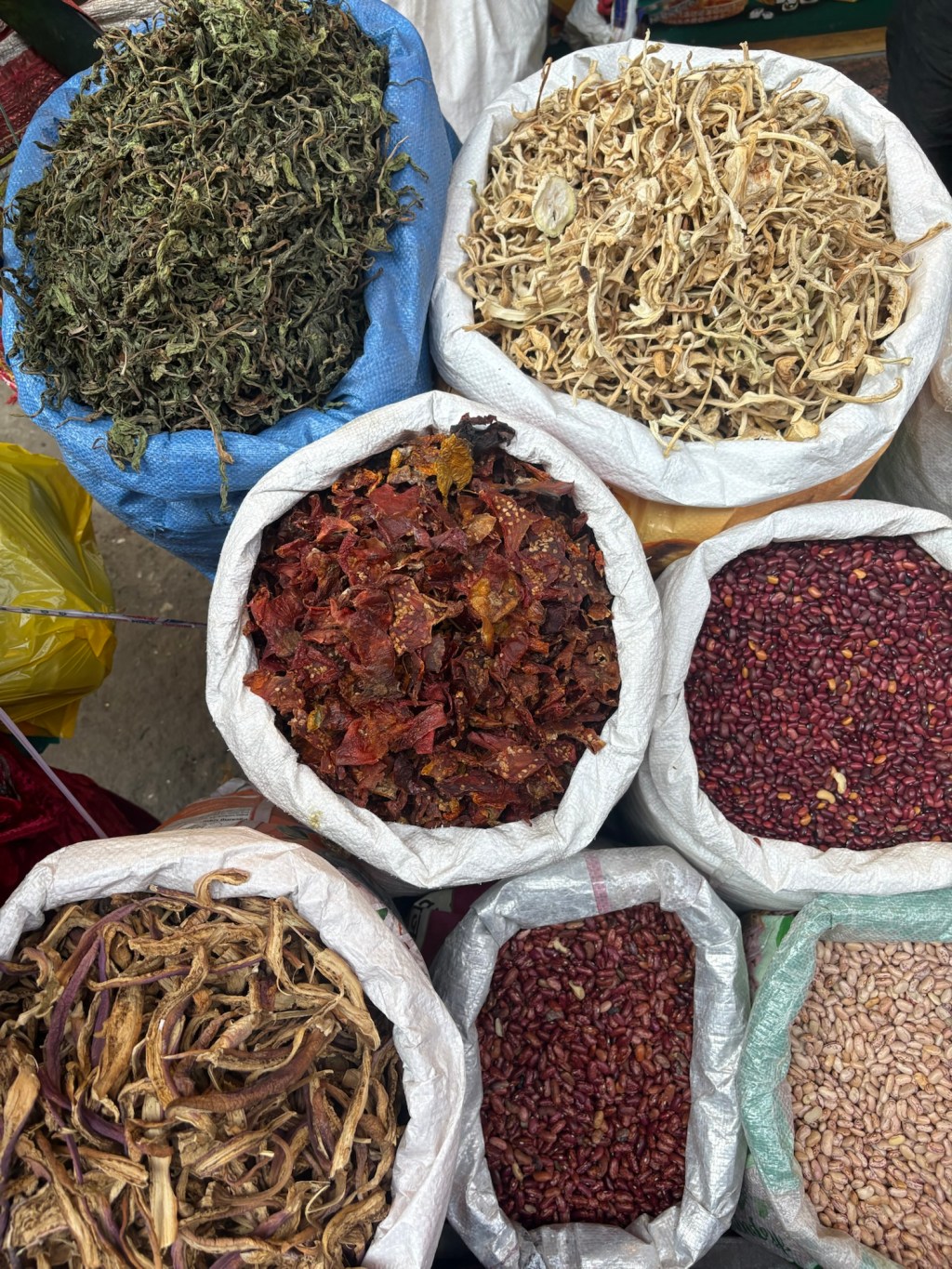
A casual stroll through Srinagar’s old market turned into a discovery of the valley’s quiet art of preservation where sunlight, patience and memory blends into the taste of winter. As autumn sun had begun to mellow, I stepped out with two friends for a quick trip to the market but the lanes had different plans for us.
I crossed a few lanes and instantly spotted deep violet curls stacked up in a bag alongside other vegetables spread out like small islands of memory. The sight stopped us in ourtracks and I picked up a handful of crisp and aromatic dried tomatoes. Immediately after, one of my friends smiled and recalled how her mother had been searching for these vegetables since summer time. Therefore, we bought a few of those items and rushed back home.
However, that sight and aroma did not leave my memory so I ended up reading more into it and figured out that the act of drying vegetables is more than a culinary habit. It is a quiet act of endurance. With fading autumn as the city awaits long months of snow, rooftops and gardens turn into sun-drenched galleries as most of my neighbours had strung sliced vegetables like turnips, bottle gourds, leafy greens, aubergines, tomatoes in their balconies to dry out with mellow sunlight.
Known locally as hokh syun, this age-old practice was born out of necessity as for generations, Kashmir depended on dried and stored products to survive through harsh winters when roads remained closed and fresh vegetables were scarce. Every household had its own stockpile of chillies drying in corners, vegetables threaded on twine and hung from rafters or along balconies. It was an attempt to save light for the darker days, not just a form of culinary foresight shaped by the valley’s isolation and weather.
Culturally, Hokh syun was not considered a domestic task but a community event. Women gathered in their houses, slicing vegetables and putting them out in the sun for use in winters. The work of one season was supposed to feed during another.
When I finally cooked the dried vegetables bought earlier from the market, I experienced they have a unique earthy and smoky flavour to them thus bringing a sensory memory of summer’s warmth.
Local jargon for dried vegetables is quite different, ranging from Ruwangan hachi (dried tomatoes), hakh hachi (dried collard greens), alle hachi (dried bottle gourd), wangan hachi (dried brinjal) to gogji aar (dried turnips). As Kashmir has high-altitude terrain and sunshine is both abundant and scarce, hokh syun becomes a metaphor for patience and perseverance. Today, this custom still continues but in subdued forms as in urban places, convenience is definitely favoured over traditions but in rural households, old customs still endure. To conserve means to remember and to understand that whatever fades still returns, altered but vital.
Entrepreneurs and traders in cities selling these traditional veggies provide a slight boost to hokh syun. What was once a symbol of survival has become a symbol of identification.
Beyond cultural worth & nutritional value, this age old tradition is a symbol of self-reliance.
Hokh syun is not only about food but the philosophy of endurance. An echo of old wisdom that nothing should be wasted, not even sunlight.
To eat hokh syun is to taste the art of waiting – a reminder that waiting can be delicious too.


 HARDEEP BALI
Leave a comment