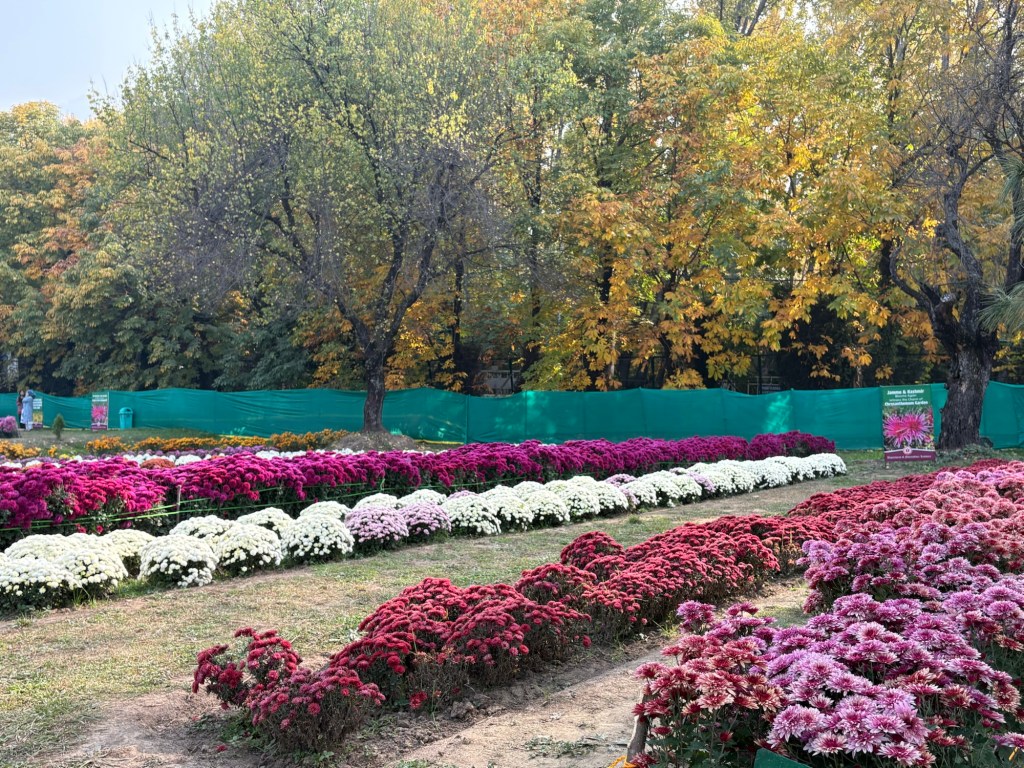
With autumn sneaking into our homes, the valley is wrapping itself up in gold and amber as Chinars are shedding their russet leaves in mellow quiet crisp air. Nippy November often puts snooze on the tourists and nature lovers and their visits to the gardens but this season, Chrysanthemums have brought back a burst of happiness and colour even in autumn reclaiming attention from thousands of visitors.
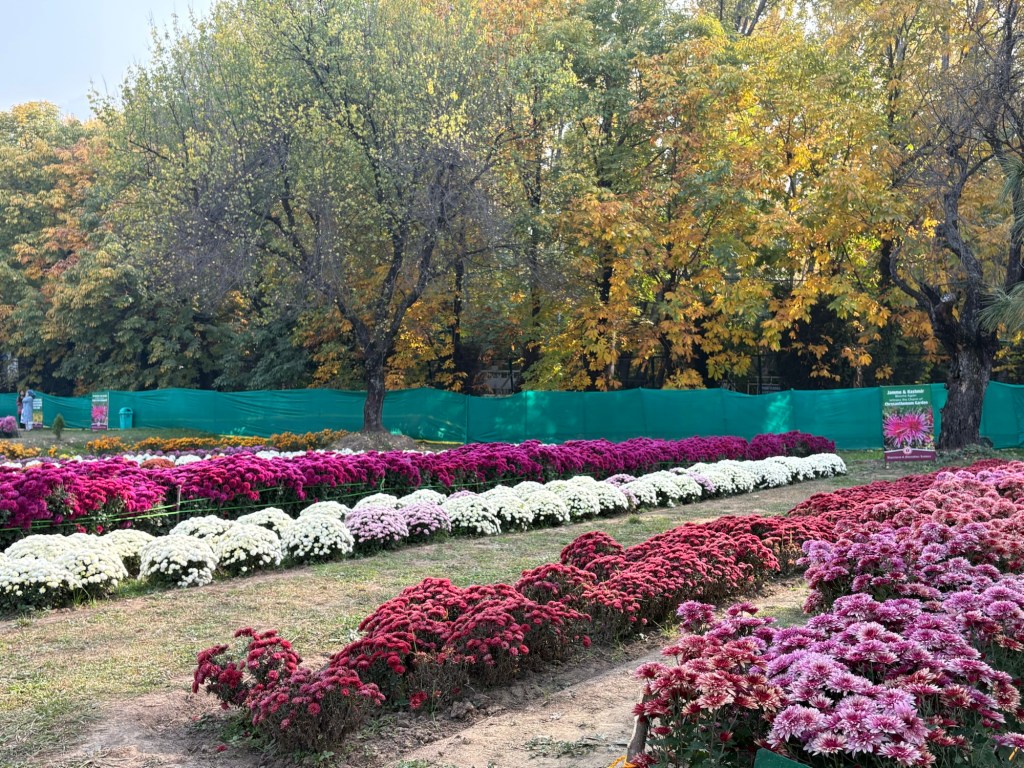
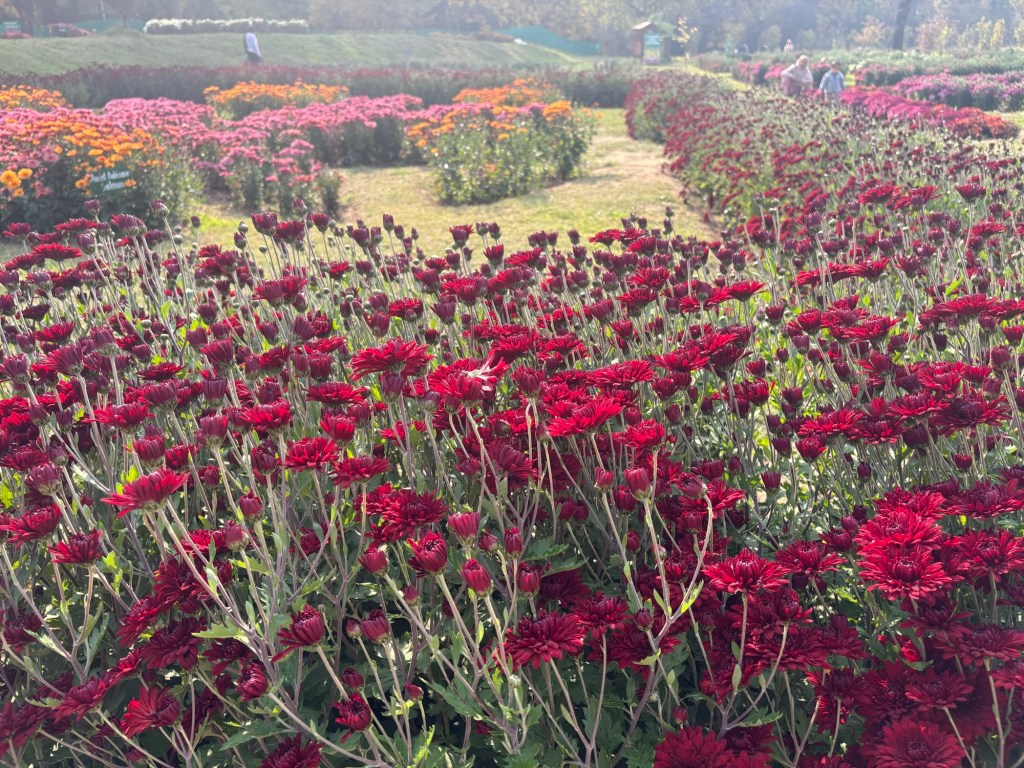
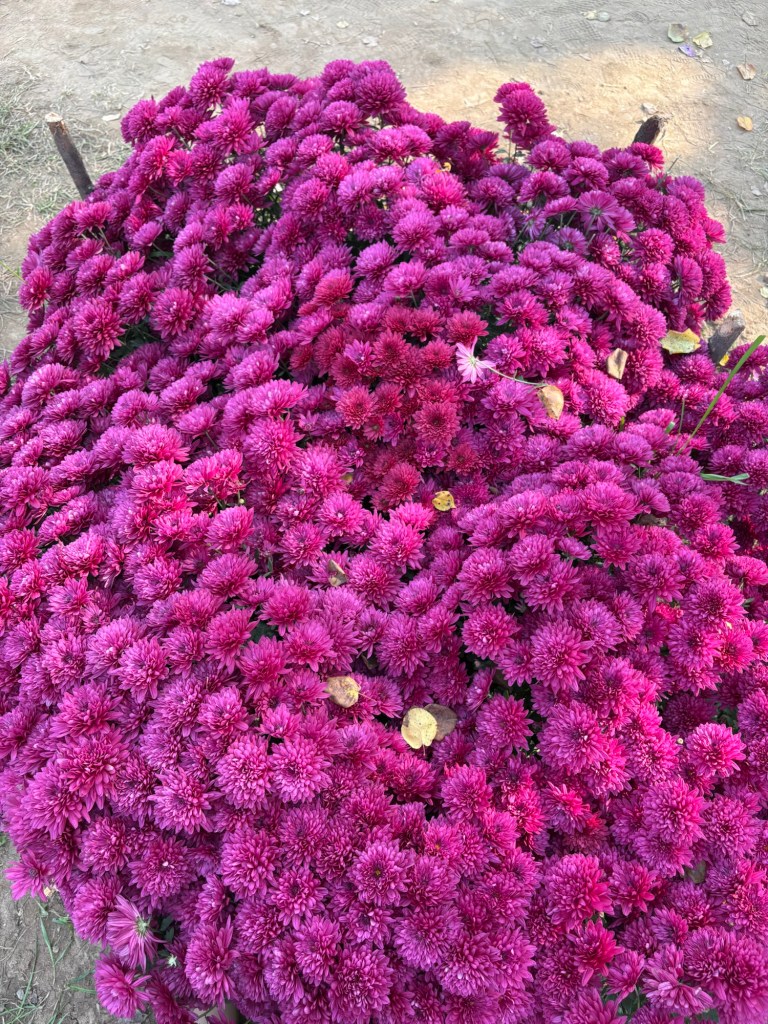
Nestled within the Botanical garden overlooking Dal Lake, Bagh-I-Gul Dawood welcomes all with velvety blooms from buttery yellows to deep magentas bringing autumn’s brightest spectacle to forefront with more than 50,000 potted blooms this year & 50 verities curated meticulously by the Department of Floriculture.
Before winter cloaks the valley in white, Chrysanthemum blooms offer a poetic pause for Kashmir to breath in colors again. Gul-e-Dawood in the Kashmiri language refers to Chrysanthemum which is also known as gold flower in Ancient Greek. Just the way, Tulip Garden became the emblem of spring, Chrysanthemum is emerging as the symbol of of autumn- radiant and resilient.
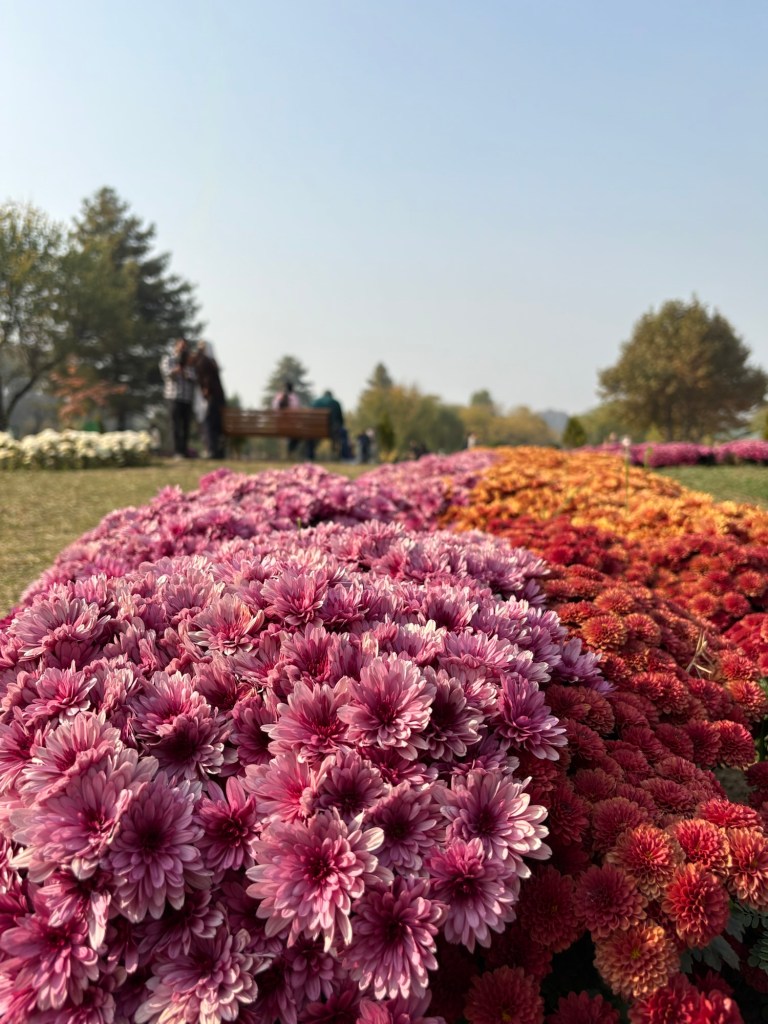
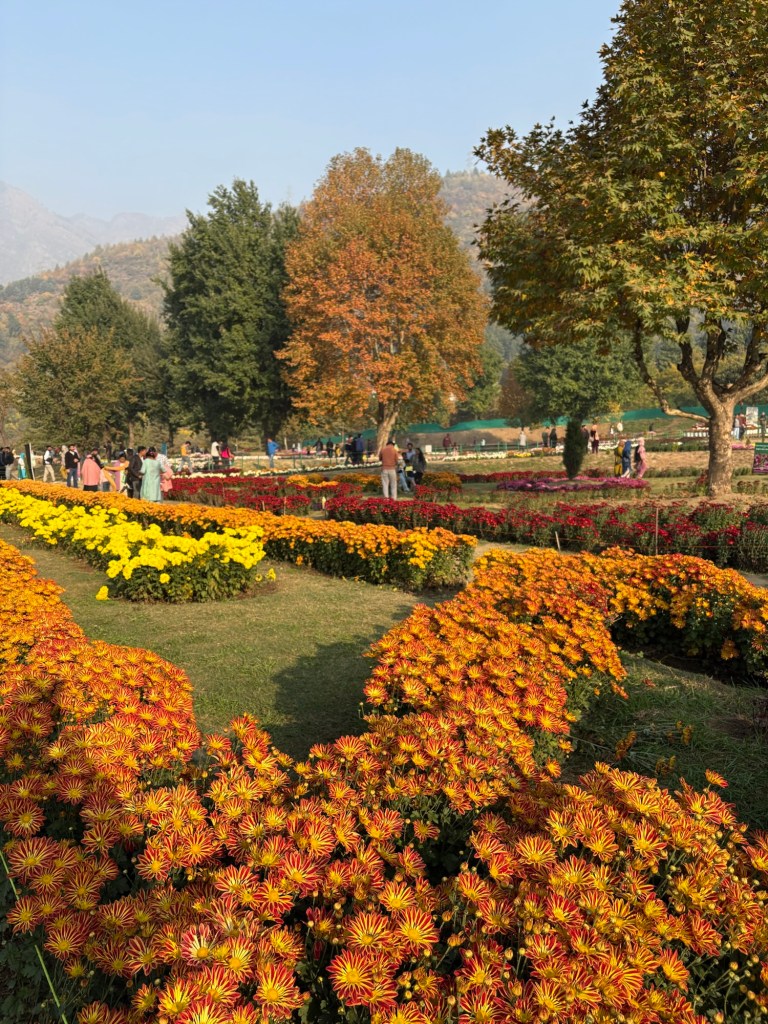
Usually, valley’s gardens went quiet post summer but this floral resurgence seemed to have revived not just landscape but also local spirits. With tourists and locals flocking in for walk through rows of flowers has given autumn a new spark of life. This revival of tourist season reflects as conscious effort by the Department of Floriculture, Gardens & Parks, J&K for extending Kashmi’r tourism calendar beyond the famed Tulip garden. The Chrysanthemum theme graden showcases dozens of varieties including Jasoda Purple, Flavio, Nowara Red, Manga Red, Cesar Apricot and many more.
Beyond Beauty: Uses of Chrysanthemum
Chrysanthemums are prized around the world for their cultural and therapeutic use, despite their obvious aesthetic appeal. It is well known that the leaves and petals offer anti-inflammatory and cooling qualities. Chrysanthemum tea, which is brewed from dried flowers, is used in traditional Chinese and Japanese medicine to reduce fever, calm nerves, and soothe eyes.
In Japanese culture, the blossom is especially revered as a symbol of immortality and renewal; the Japanese Imperial dynasty even uses it as their insignia. ‘Gul-e-Daudi’ is used in households and for healing in Kashmir as well. The petals of the flowers are occasionally dried and preserved as aromatic offerings during winter ceremonies, while the flowers themselves are used to make herbal infusions and natural colors.
Gul-e-Daudi: A Symbol of Renewal
In the middle of fall, the Chrysanthemum Garden has evolved into more than a floral wonder— it’s a living canvas of community and joy. For children, its twisting walkways and bursts of velvety petals have transformed it into a new playground, with laughter echoing over rows of golden and scarlet flowers.
The youth, captivated to its color-drenched beauty, have discovered the garden to be an ideal selfie location, with each frame portraying Kashmir’s restored vibrance after long, silent seasons. Meanwhile, the elderly gather each evening with flasks of kahwa, their discussions as gentle as the Dal air, reminiscing about the valley’s historic gardens and forgotten traditions.
In a land where every season writes its own poetry, the chrysanthemum has found its verse. It blooms not in defiance of the cold, but in companionship with it — reminding the valley that beauty does not end with spring. The Gul-e-Daudi Garden stands today as a living ode to endurance — a velvety bloom in the heart of autumn, whispering that the valley, too, continues to flower through every change.

 HARDEEP BALI
Leave a comment